
Intrauterine Insemination (IUI) in Las Vegas: What to Expect
Intrauterine insemination (IUI), also known as artificial insemination, is a fertility treatment that increases the chances of conception by placing specially prepared sperm directly into the uterus around the time of ovulation.
This shortens the distance sperm has to travel and increases the number that reach the fallopian tubes — where fertilization naturally occurs. For patients whose diagnosis makes IUI treatment an appropriate option, it can meaningfully improve the chances of pregnancy without more complex intervention.
At The Fertility Center of Las Vegas, our reproductive endocrinology specialists will evaluate your reproductive health and history to determine whether IUI is the right approach for your situation — and guide you through every stage of the process.
When is Intrauterine Insemination (IUI) recommended?
Our specialists may recommend intrauterine insemination (IUI) for patients in the following situations:
- Unexplained infertility: when all fertility tests show normal results but pregnancy hasn’t occurred naturally.
- Mild male factor infertility: when a semen analysis identifies minor issues with sperm count or motility that don’t rule out natural fertilization.
- Cervical factor: when cervical mucus interferes with sperm reaching the egg. IUI bypasses the cervix entirely by placing sperm directly into the uterus.
- Patients using donor sperm: IUI is a common approach for married or single women and same-sex female couples using donor sperm.
Whether IUI is the right approach will always be a shared decision with you and your doctor, based on a careful review of your family building timeline, reproductive history, diagnostic results, and the realistic likelihood of success for your specific situation.
What are the requirements for IUI?
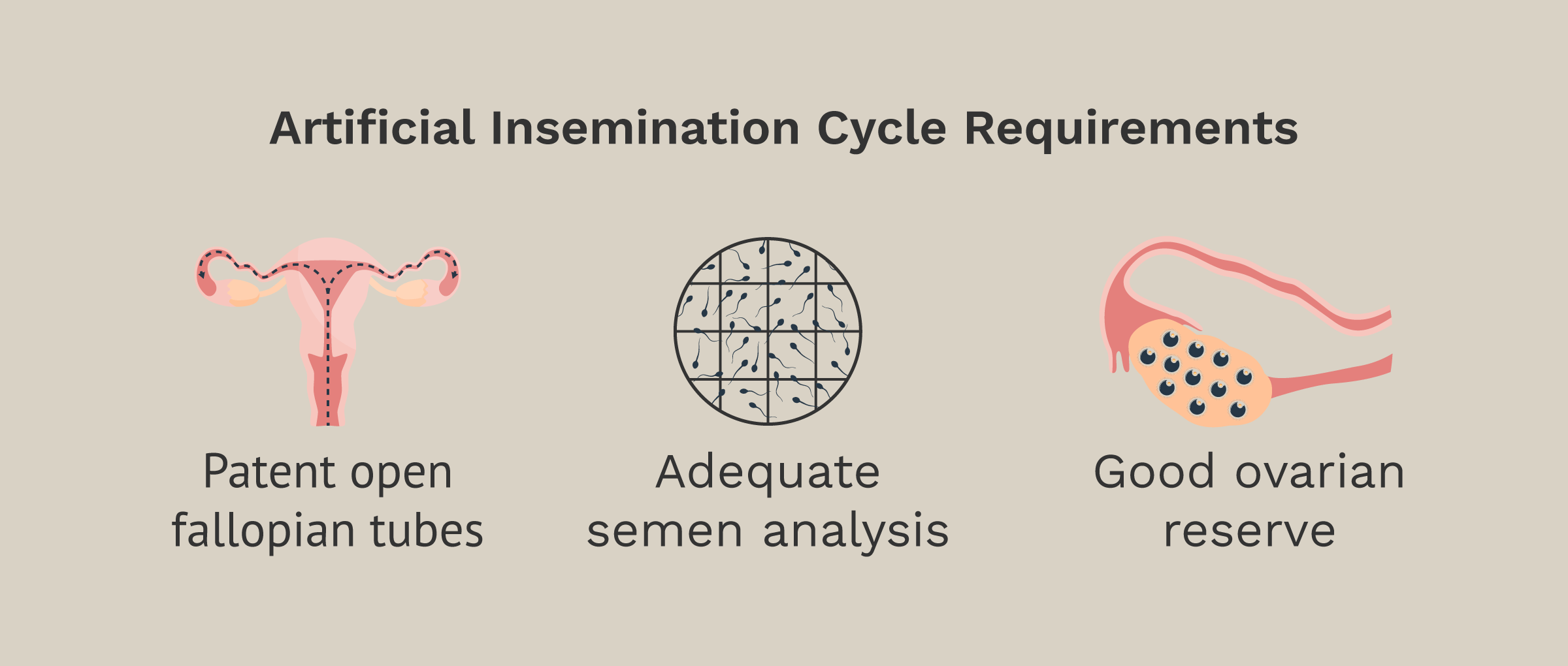
Before recommending IUI, our team evaluates a few key factors to confirm it’s a viable option:
- At least one open fallopian tube: since fertilization happens inside the fallopian tube, the path needs to be clear. We typically confirm this with a HyFoSy or HyCoSy evaluation.
- An adequate semen sample: while the sperm washing process concentrates the strongest sperm, a minimum number of motile sperm is needed to give the procedure a reasonable chance of success.
Age and ovarian reserve also play an important role in this assessment. Egg quality naturally decreases over time — particularly after age 35 — and your doctor will factor this into the recommendation, including whether IUI or a more advanced approach gives you the best chance of success.
The IUI procedure: step by step
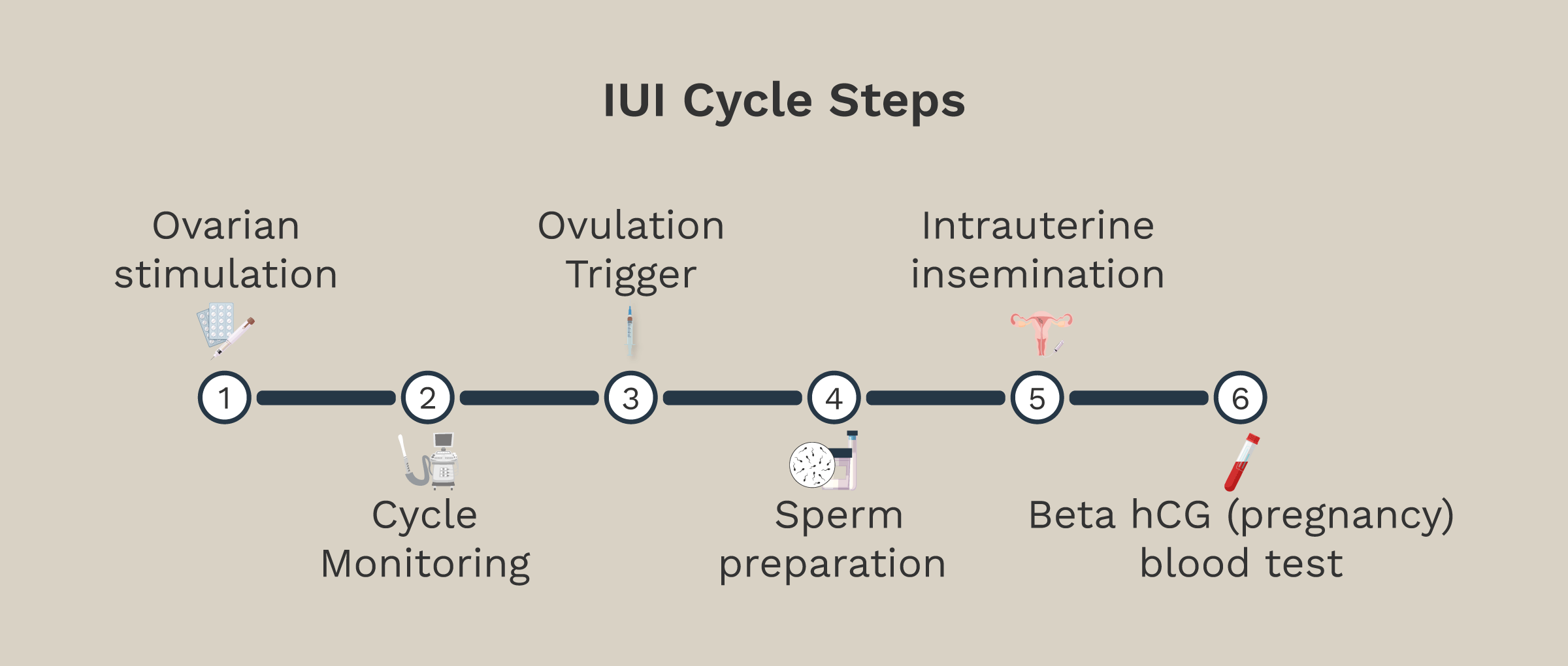
The intrauterine insemination (IUI) cycle process consists of several coordinated phases:
- Ovarian stimulation: at the start of your cycle, we may prescribe ovulation induction medications to help your ovaries develop one or two healthy follicles. These are taken during the first days of your period.
- Monitoring: throughout the ovarian stimulation phase, your doctor will use transvaginal ultrasound to track follicle growth and determine the ideal timing for insemination.
- Ovulation trigger: once the follicles reach the right size (around 16–18mm), an hCG injection is given to trigger ovulation at a precise, predictable time.
- Sperm wash: a semen sample from your partner or donor is processed in our laboratory to concentrate the healthiest, most motile sperm and remove any other seminal fluids.
- Insemination: the prepared sperm sample is placed directly into the uterus using a thin, flexible catheter passed gently through the cervix. The procedure takes only a few minutes, requires no anesthesia, and is well tolerated by most patients.
After the insemination, you’ll begin a 14-day period known as the two-week wait before your beta hCG blood test, which will tell us whether the cycle resulted in pregnancy.
What is the success rate of IUI?
IUI success rates depend primarily on age and the underlying cause of infertility. As a general guide:
- Under 35: approximately 10–15% chance of pregnancy per cycle
- Ages 35–40: approximately 10% per cycle
- Over 40: approximately 5% or less per cycle
One important thing to understand is that the IUI success rate is cumulative. Completing three or four cycles consecutively gives you a meaningfully higher overall chance of pregnancy than a single attempt.
At The Fertility Center of Las Vegas, we closely monitor how your body responds to each cycle. If pregnancy hasn’t occurred after three or four attempts, we’ll sit down with you to review the results and discuss whether progressing to IVF or another approach makes sense for your situation.
Ready to learn more? Let’s talk
If you’d like to find out whether IUI is a good fit for your situation, our team is here to help. Schedule a consultation at The Fertility Center of Las Vegas and let’s take the next step together.