
Embryo freezing (cryopreservation) in Las Vegas allows you to freeze your embryos for future use
Embryo freezing — also called embryo cryopreservation — allows you to preserve embryos created during an IVF cycle for future use. Whether you’re not ready to transfer right away, planning for additional children later, or facing a medical situation that makes freezing the right decision, embryo cryopreservation gives you flexibility over your timeline.
At The Fertility Center of Las Vegas, our team guides you through every step — from the IVF cycle that creates the embryos to the transfer when you’re ready to use them.
How does embryo cryopreservation work?
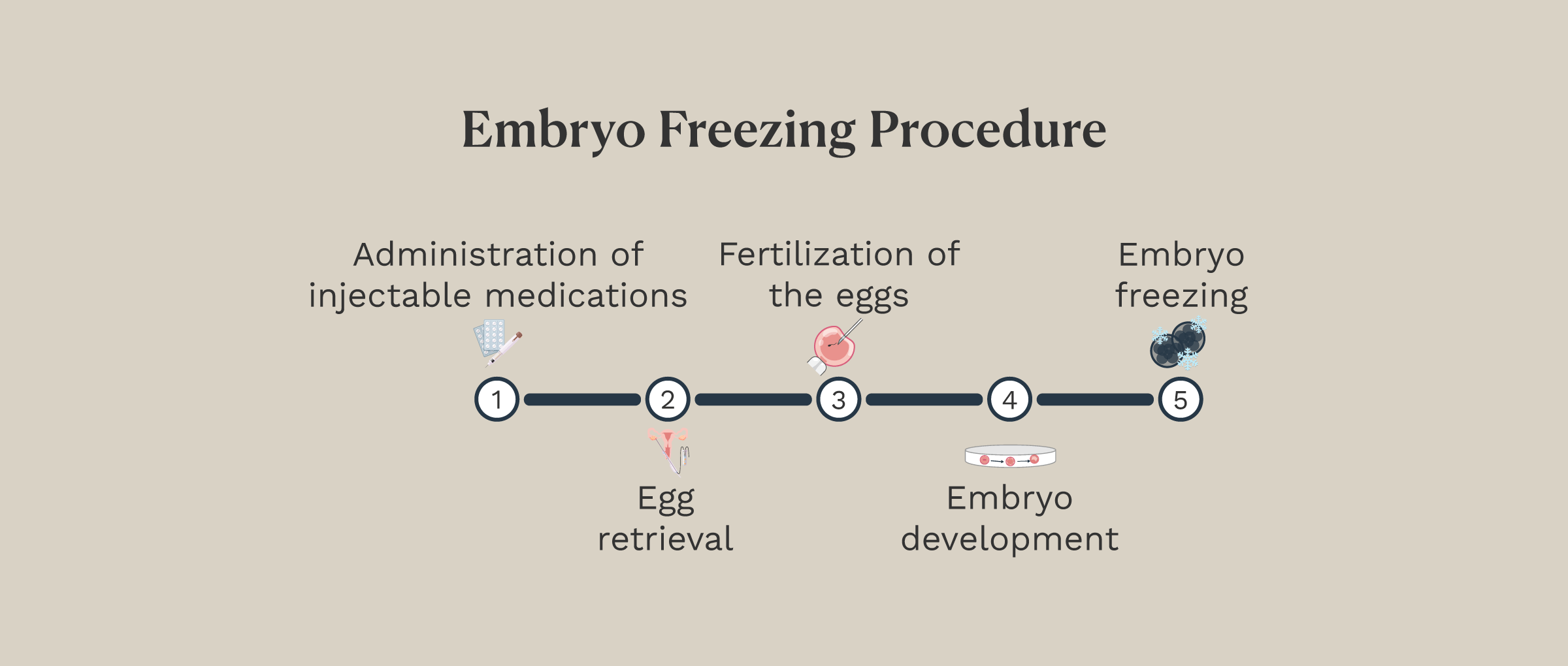
Embryo freezing requires an IVF (in vitro fertilization) cycle to create the embryos. Our Las Vegas fertility doctors walk you through each step of the procedure for freezing embyros:
- The patient providing eggs takes injectable fertility medications to stimulate the ovaries to produce multiple eggs.
- When the eggs are mature, an egg retrieval procedure is performed at our clinic as a brief outpatient procedure under sedation.
- Embryologists in our IVF lab fertilize the retrieved eggs using sperm from the patient’s partner or a sperm donor.
- When the embryos reach approximately day 5 of development — the blastocyst stage — embryologists flash-freeze them using vitrification.
Once frozen, embryos can remain stored for years or decades. When you’re ready to use them, embryologists thaw the frozen embryos and one of our doctors performs a frozen embryo transfer to the uterus of the intended parent or a gestational surrogate. You can also read more about how long frozen embryos can be stored.
Who should consider embryo freezing?
Embryo cryopreservation is a good option in a range of situations:
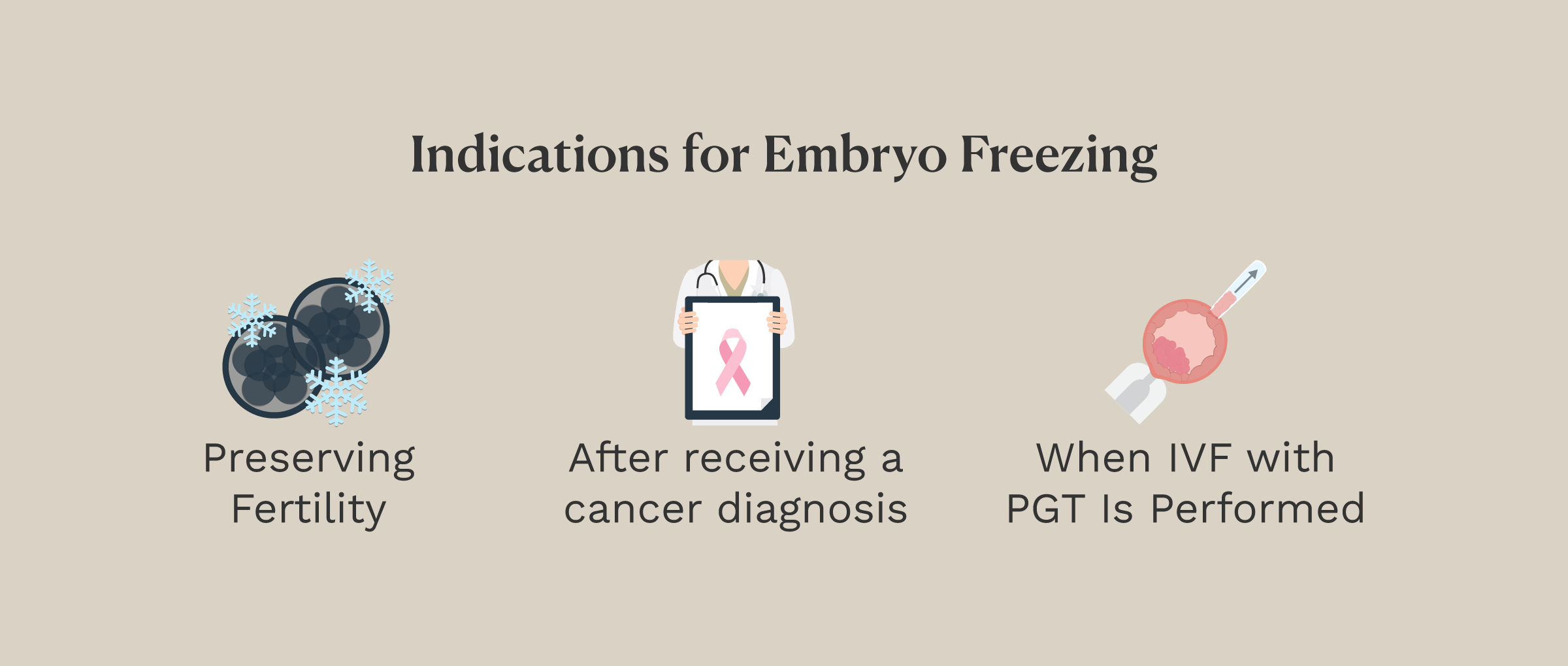
- After an IVF cycle: if you produce more embryos than you plan to transfer right away, freezing the extras preserves them for future cycles without repeating the full stimulation process.
- IVF with preimplantation genetic testing (PGT): embryos created during an IVF cycle are typically frozen while PGT results are processed. The transfer occurs in a subsequent cycle after results confirm which embryos are suitable.
- Elective fertility preservation: patients who aren’t ready to start a family yet but have a partner or have decided to use donor sperm can create and freeze embryos now to preserve their fertility.
- Before cancer treatment or other medical procedures: cancer treatments can affect fertility. Freezing embryos before chemotherapy, radiation, or surgery protects future reproductive options.
Benefits and success rates of embryo freezing
The main advantage of embryo freezing is that your embryos retain the quality they had at the time of vitrification. At −196°C in liquid nitrogen, biological time is completely suspended — cellular activity stops, and the embryos are preserved in their current state.
Research has also shown that frozen embryo transfers can match or even exceed the success rates of fresh transfers. Transferring in a deferred cycle allows the uterine lining to be prepared under more controlled conditions — without the hormonal effects of ovarian stimulation still present. At The Fertility Center of Las Vegas, our live birth rates with frozen embryo transfers have exceeded national averages for several years.
Questions about embryo freezing? We’re here
If you’d like to learn more about embryo cryopreservation and whether it’s the right step for you, contact us to schedule a consultation at The Fertility Center of Las Vegas. Our team will walk you through your options.