
Preimplantation genetic testing (PGT) in Las Vegas
In vitro fertilization (IVF) is one of the most effective fertility treatments available — and preimplantation genetic testing (PGT) can make it more so. PGT gives our embryologists a window into each embryo’s genetic material before any transfer takes place, allowing us to select the embryo most likely to implant successfully.
Patients come to our Las Vegas fertility specialists for help navigating this process. Adding PGT to an IVF cycle is one of the more effective tools we have for improving the odds of a successful transfer, particularly for patients with a history of miscarriage, failed cycles, or known genetic concerns.
What is preimplantation genetic testing (PGT)?
PGT is a laboratory test performed on embryos created during an IVF cycle. The goal is not to alter anything in the embryo, but to examine a small number of its cells and evaluate the genetic material before the embryo is transferred to the uterus.
PGT requires an embryo biopsy — a safe procedure that takes place between fertilization and embryo transfer. Because it happens entirely in the laboratory, PGT involves no additional procedures or discomfort for you.
All types of PGT can also identify the chromosomal sex of each embryo — male (XY) or female (XX) — if you want this information.
What is the PGT process in an IVF cycle?
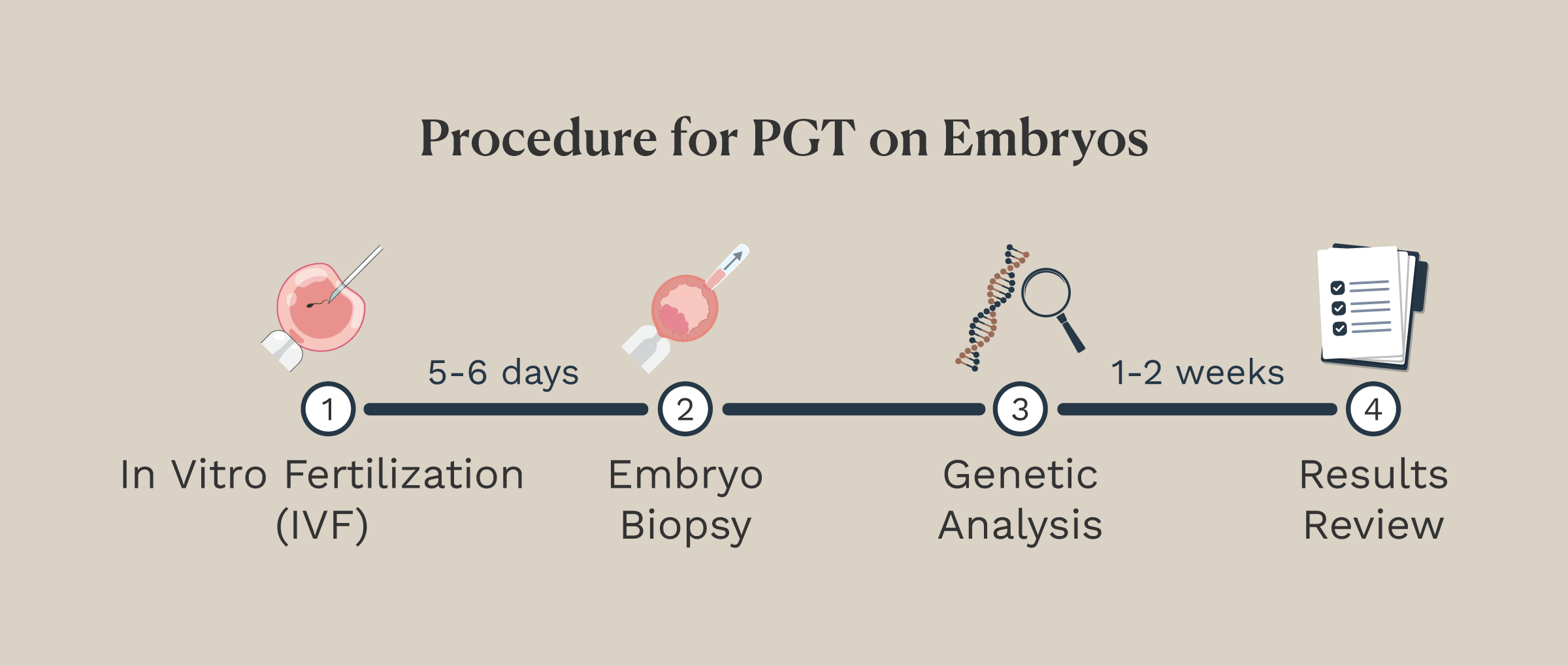
Adding genetic testing to an IVF cycle extends the timeline slightly, but it can provide valuable peace of mind. Once eggs are retrieved and fertilized in our laboratory, the embryos grow for five days until they reach the blastocyst stage.
From this point, the PGT process includes the following steps:
- Embryo biopsy: our embryologists carefully remove a few cells from the embryo’s outer layer (the trophectoderm). This outer layer forms the placenta — the cells that will become the baby itself are not touched.
- Embryo freezing: after the biopsy, the embryos are frozen while the sample is analyzed.
- Laboratory analysis: the cells are evaluated to count chromosomes or identify specific genetic variants, depending on the type of PGT ordered.
- Results: PGT results are typically ready in about two weeks. Embryos found to have chromosomal abnormalities are not suitable for transfer.
Among the chromosomally normal embryos, one is selected for transfer. Remaining embryos stay frozen for future use.
What types of PGT are available?
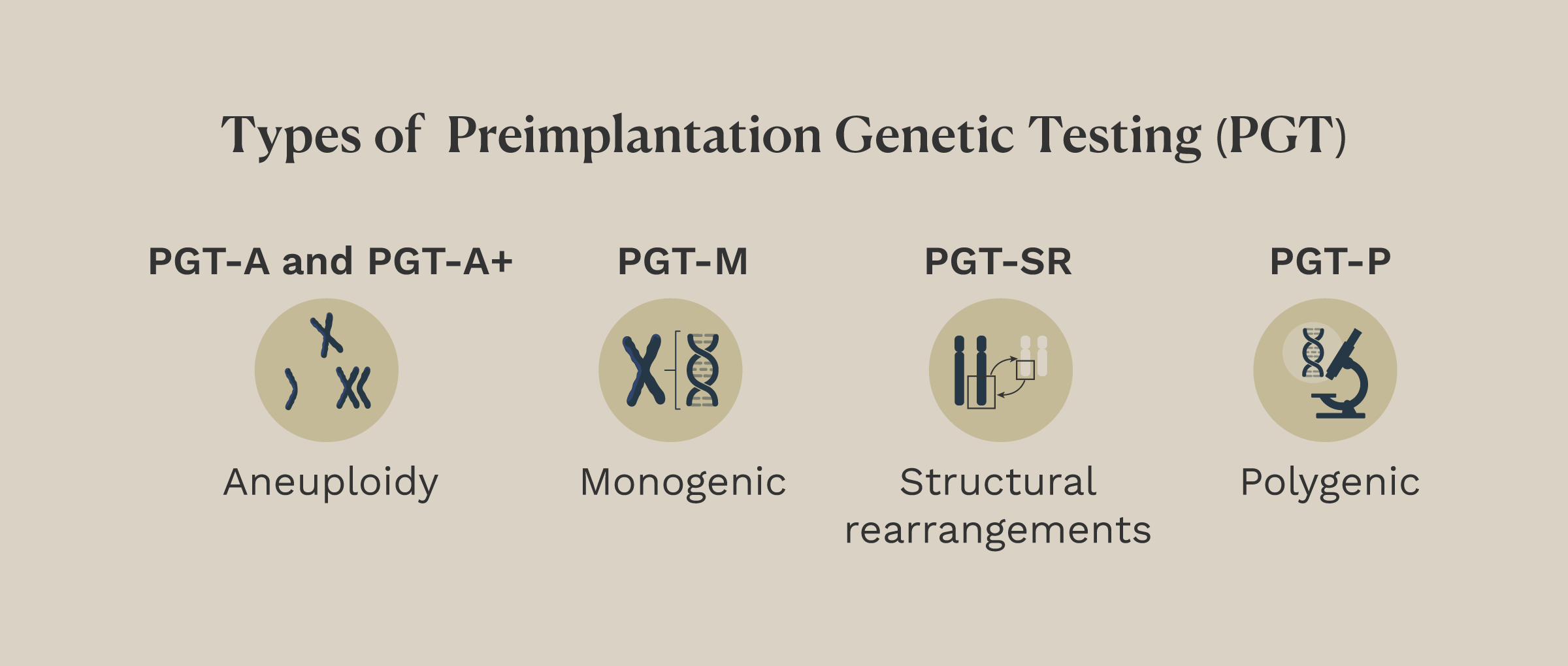
At The Fertility Center of Las Vegas, we offer a full range of PGT options. Your fertility specialist will recommend which tests are appropriate for your specific situation:
- PGT-A and PGT-A+ (Preimplantation Genetic Testing for Aneuploidy): formerly called PGS. This test evaluates whether an embryo has the correct number of chromosomes. Abnormalities of chromosome number — known as aneuploidy — are a leading cause of implantation failure and miscarriage. At The Fertility Center of Las Vegas, we offer both standard PGT-A (using next-generation sequencing) and advanced PGT-A+ with LifeView™ using SNP array, which can also detect polyploidy and uniparental disomy.
- PGT-M (Preimplantation Genetic Testing for Monogenic/Single-Gene Disorders): formerly called PGD. PGT-M looks for specific gene mutations that cause inheritable conditions such as sickle cell disease, cystic fibrosis, or Tay-Sachs disease. Patients who carry or are affected by a known genetic disorder can use PGT-M to avoid passing it on. PGT-M can be performed alongside PGT-A.
- PGT-SR (Preimplantation Genetic Testing for Structural Rearrangements): this test identifies chromosomal structural abnormalities such as reciprocal translocations, Robertsonian translocations, or chromosomal inversions — where sections of chromosomes are missing, duplicated, or misplaced. PGT-SR can be combined with PGT-A.
- PGT-P (Preimplantation Genetic Testing for Polygenic Disorders): this test provides an Embryo Health Score that estimates each embryo’s risk for polygenic conditions such as diabetes, cardiovascular disease, schizophrenia, or certain cancers. It helps you make more informed decisions about which embryo to transfer.
Who should consider preimplantation genetic testing?
Our Las Vegas fertility specialists may recommend PGT as part of your IVF cycle based on your goals and medical history:
- PGT-A and PGT-A+: often recommended for patients over 35, those who have experienced multiple miscarriages or failed IVF cycles, or patients who want to know the chromosomal sex of embryos before transfer.
- PGT-M: for patients who carry or are affected by a specific genetic disorder or hereditary cancer syndrome. Preconception genetic carrier screening can identify whether you or your partner carry an inheritable condition.
- PGT-SR: recommended when a patient or partner is a known carrier of a chromosomal structural rearrangement, has received an abnormal karyotype result, or has had a child with a chromosomal rearrangement.
- PGT-P: an option for patients with a personal or family history of polygenic conditions who want additional information when choosing which embryo to transfer.
Preimplantation genetic testing can benefit many patients throughout the IVF process by helping our team select the embryo that is most likely to implant and grow into a healthy baby.
If you have questions about whether PGT is appropriate for your cycle, our team can help you work through the decision. Schedule a consultation to learn more about pairing IVF and PGT.
Questions about preimplantation genetic testing? We’re here
If you’d like to learn more about PGT and whether it makes sense for your IVF cycle, our team is ready to help. Schedule a consultation at The Fertility Center of Las Vegas.