
Assisted hatching in Las Vegas: an IVF add-on that supports embryo implantation
At The Fertility Center of Las Vegas, our embryologists offer a range of advanced laboratory techniques alongside in vitro fertilization (IVF). Assisted hatching is one of them — a targeted procedure that can help certain embryos implant more easily in the uterus. Our team will assess your embryos individually and let you know whether assisted hatching is likely to be useful in your case.
What is assisted embryo hatching?
In its earliest days of development, a human embryo is surrounded by a protective layer called the zona pellucida. Before the embryo can attach to the uterine wall and implant, it must break through and emerge from this shell. This natural process is called hatching.
Sometimes the shell of the embryo is too thick or rigid for the embryo to hatch on its own. Assisted hatching is a laboratory procedure in which our embryologists create a microscopic opening in the zona pellucida surrounding each embryo. This small assist makes it easier for the embryo to emerge and implant properly in the uterus.
How is assisted hatching performed on embryos?
The assisted hatching procedure is performed in our laboratory before the embryo transfer, or before genetic testing such as PGT.
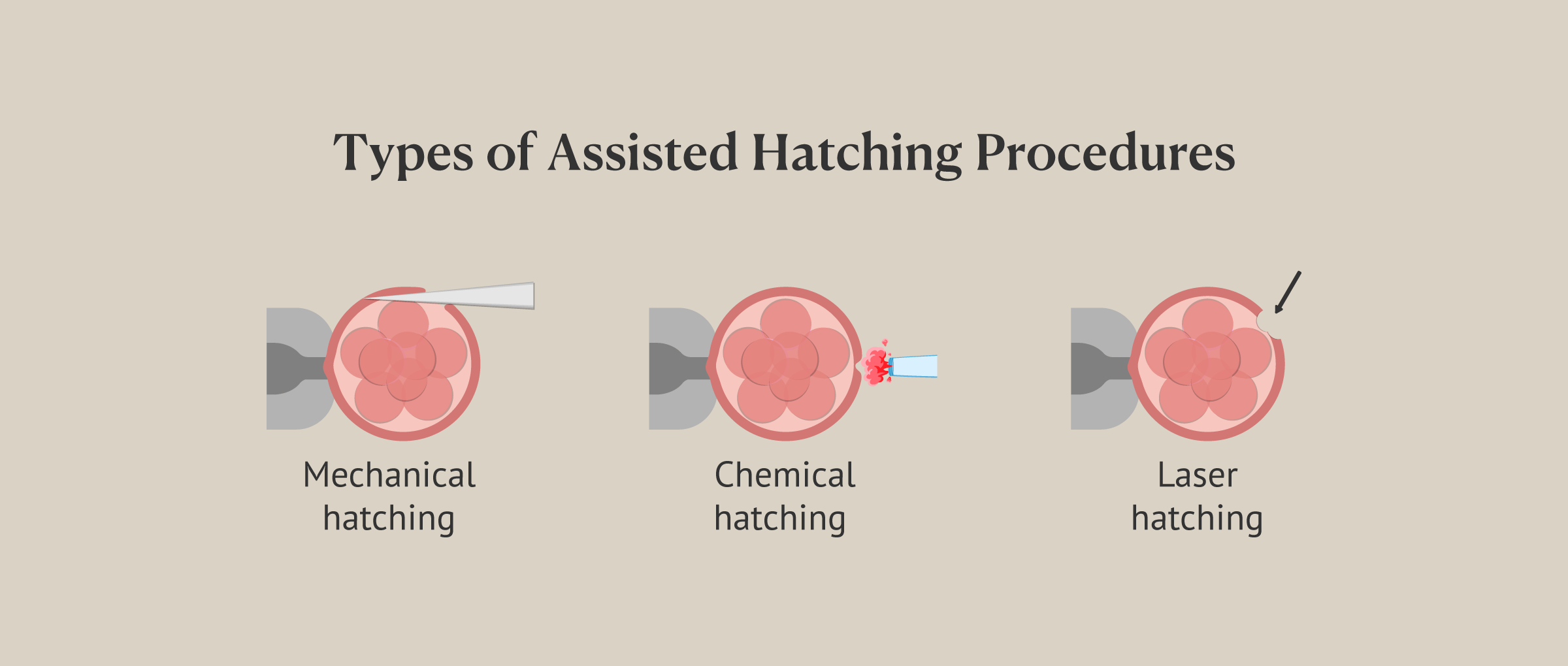
There are three assisted hatching procedures:
- Mechanical hatching: a fine needle is used to pierce the zona pellucida.
- Chemical hatching: a small amount of acidic solution is used to create an opening in the zona pellucida.
- Laser hatching (the method we use at The Fertility Center of Las Vegas): our embryologists apply precise pulses of laser light to create a microscopic opening in the zona pellucida. The laser is calibrated to act on the outer shell only, leaving the inner cells of the embryo undisturbed.
After the procedure, the embryos are returned to the incubator before one is selected for transfer. The assisted embryo should have an easier time emerging from its shell during the implantation window.
When is assisted hatching used or recommended?
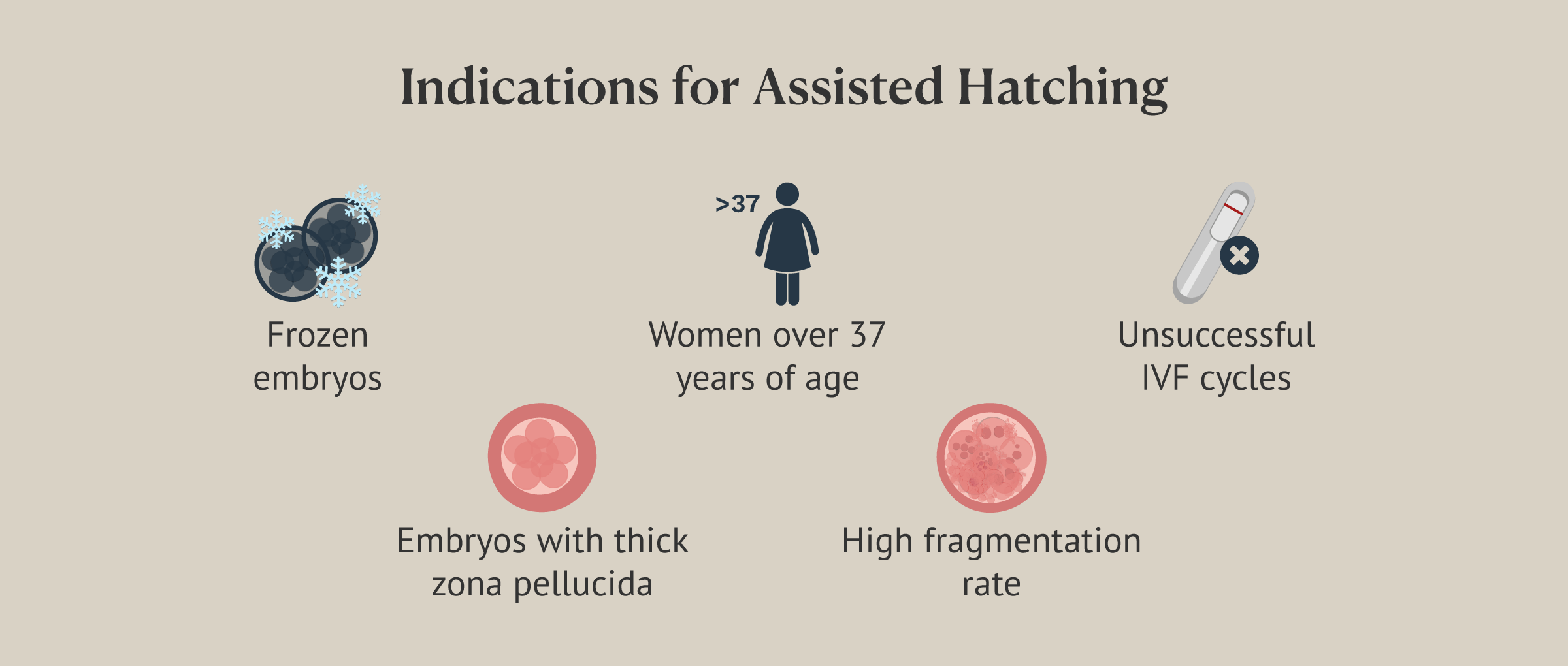
Assisted hatching is not performed routinely — it’s recommended for specific situations where the embryo’s shell may pose a barrier to implantation:
- Frozen embryo transfer: the process of freezing and thawing an embryo can sometimes harden its outer shell.
- Patients over 37: with age, the zona pellucida naturally tends to become thicker, making spontaneous hatching more difficult.
- Previous unsuccessful IVF cycles: if good-quality embryos have failed to implant in prior transfers.
- Embryos with an unusually thick zona pellucida: our embryologists can observe this directly while evaluating embryos on day 3 or day 5 of development.
- Embryos with a high percentage of fragmentation: assisted hatching can allow some of those fragments to be aspirated.
Assisted hatching success rates
Success rates for assisted hatching depend on each patient’s profile and the clinical indication. Studies show that laser-assisted hatching can improve implantation rates in selected patients — particularly those over 37, patients undergoing frozen embryo transfers, and those with previous implantation failures.
Assisted hatching is a complementary tool within an IVF cycle, not a standalone treatment. Its benefit depends on factors including embryo quality, uterine receptivity, and reproductive history. Our team evaluates each case individually to determine whether it’s likely to be helpful.
Questions about assisted hatching? We’re here
If you’d like to learn more about assisted hatching and whether it makes sense for your IVF cycle, our team is ready to help. Schedule a consultation at The Fertility Center of Las Vegas.