
Low Testosterone Treatment for Men Trying to Conceive in Las Vegas
Low testosterone (low T) can cause a loss of energy and a decrease in sex drive, and can even contribute to erectile dysfunction — the inability to achieve or maintain an erection.
At The Fertility Center of Las Vegas, we recommend that patients who want to have a baby discuss with a specialist whether to pause conventional hormone replacement therapy (injections, patches, or topical gels) before trying to conceive.
Low testosterone and male fertility
Testosterone is the primary male sex hormone. It’s produced mainly in the testicles and plays a key role in sperm production. However, having a low testosterone level doesn’t mean a person is infertile.
That’s why, for patients trying to conceive, it’s important to evaluate both hormone levels and semen quality. A fertility workup can help determine whether low testosterone is contributing to a reproductive issue and whether a treatment that doesn’t compromise sperm production should be considered.
Symptoms of low testosterone in men
Low testosterone can affect male sexual health. While it’s often associated with older age, low testosterone in younger men and adults is becoming increasingly common.
In younger patients, low testosterone often has a different origin than in older men. It can be due to a congenital cause present from birth, or it can develop from acquired factors such as obesity, diabetes, or the use of anabolic steroids or other substances. When low testosterone is detected at a young age, it’s important to identify the specific cause before deciding on treatment, since that will determine whether it’s reversible and which options are compatible with a goal of having children.
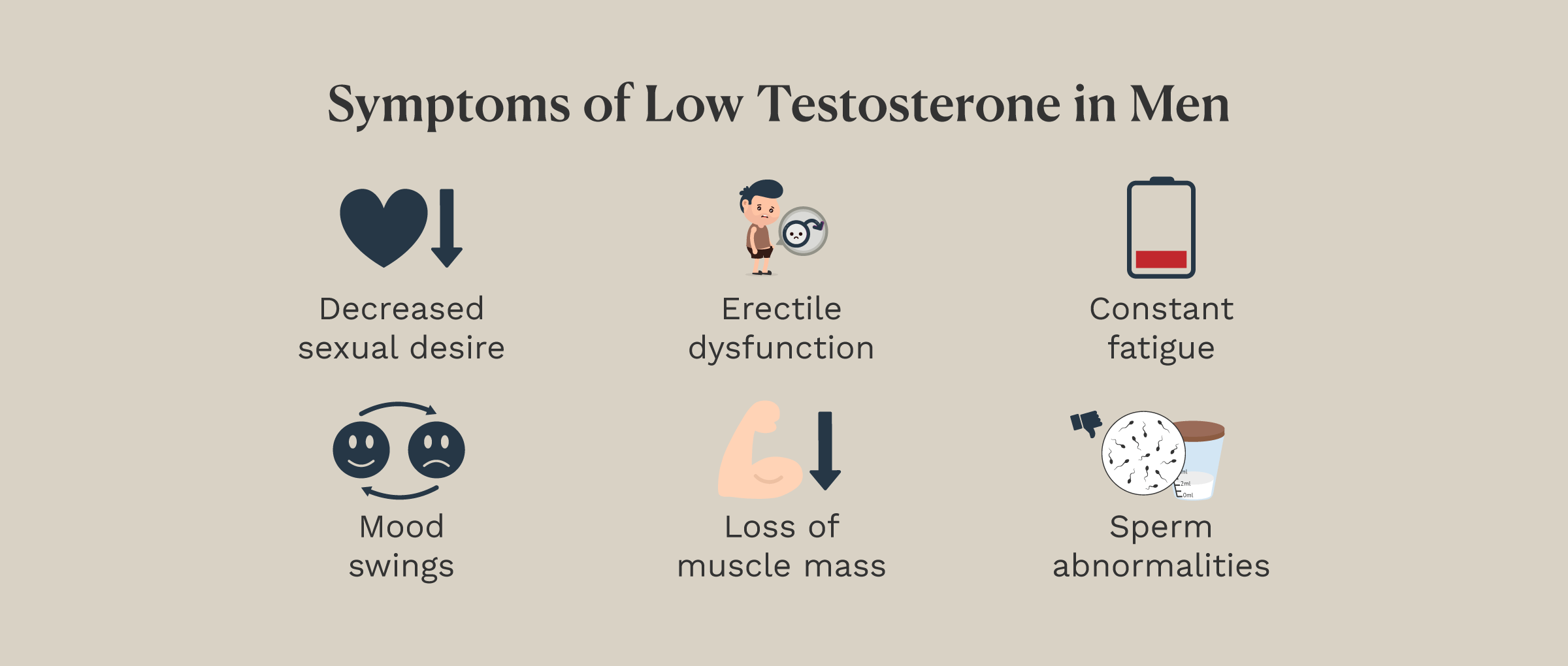
The main symptoms associated with low testosterone include:
- Decreased sex drive (low libido)
- Erectile dysfunction or difficulty maintaining an erection
- Constant fatigue or lack of energy
- Difficulty concentrating or mood changes
- Loss of muscle mass and increased body fat
- Sperm abnormalities, such as low sperm count
It’s worth noting that these symptoms can also appear with testosterone levels that are technically within the normal range, but at its lower end.
How testosterone replacement therapy can affect fertility
Testosterone replacement therapy (TRT) can help improve symptoms associated with low testosterone, such as decreased libido, fatigue, or changes in sexual function.
However, for patients who are trying to have children or want to preserve their fertility, it’s important to consider how testosterone replacement therapy can affect sperm production.
Some patients receive testosterone through patches, gels, or injections. When testosterone is introduced from an outside source, it can reduce the body’s natural production of the hormones that stimulate the testicles. As a result, sperm production can decrease and, in some cases, stop temporarily — a condition known as azoospermia.
For this reason, conventional TRT usually isn’t the treatment of choice when fertility is a goal.
Patients who are already using TRT and want to have children should talk with a specialist before changing or stopping treatment. Sperm production can recover after stopping testosterone, but the timeline varies from person to person.
Low testosterone testing and treatment
When low testosterone is suspected and fertility is also a goal, it’s important to complete a full evaluation before starting any treatment.
This evaluation may include hormone testing to measure testosterone and other hormones related to reproductive function, as well as a semen analysis to assess parameters such as sperm count, motility, and quality.
These results help determine whether low testosterone is related to a fertility issue and help identify the most appropriate treatment, taking into account both hormonal symptoms and the goal of preserving sperm production.
At The Fertility Center of Las Vegas, patients with low testosterone and fertility concerns can receive a personalized evaluation to identify the cause and explore the treatment options best suited to their situation.
Fertility-preserving treatments for low testosterone
Depending on the cause of the low testosterone, the hormone test results, and the patient’s reproductive goals, the specialist may consider treatments aimed at stimulating the body’s own natural testosterone production.
Some possible treatments for low testosterone in men include:
- Clomiphene citrate (Clomid): a medication commonly prescribed at our Las Vegas fertility center to increase sperm production. This drug works by binding to receptors in the brain, which stimulates the production of follicle-stimulating hormone (FSH) and luteinizing hormone (LH) — both of which support testosterone production. Patients prescribed Clomid typically start with a low dose, and the dosage is adjusted over several months based on blood testosterone monitoring.
- hCG injections (human chorionic gonadotropin): rather than directly replacing testosterone, these injections stimulate the testicles to produce more testosterone on their own, which can also support sperm production.
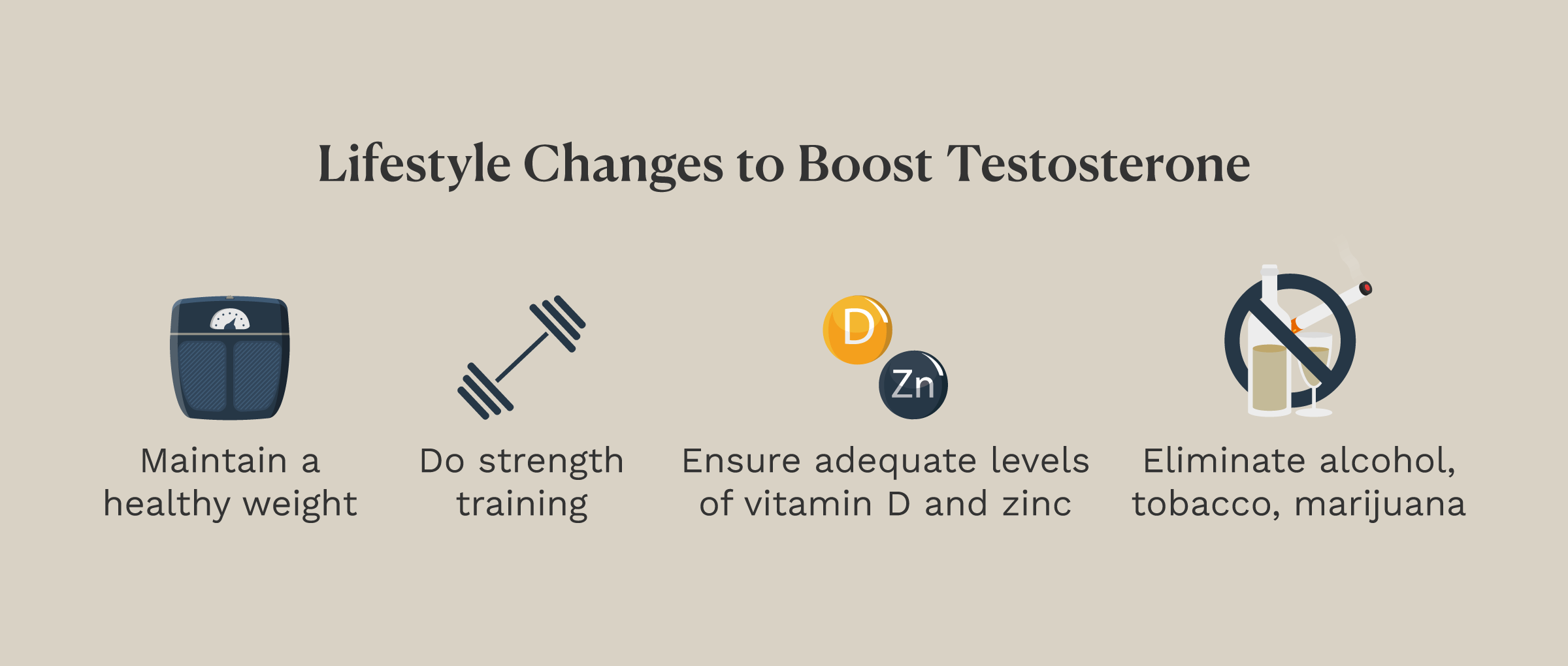
- Lifestyle modifications: because obesity can contribute to low testosterone along with elevated estrogen levels, lifestyle changes can naturally raise testosterone and improve sperm count. Maintaining a healthy weight, incorporating strength training, and ensuring adequate intake of vitamin D and zinc may help improve low testosterone. Reducing or eliminating alcohol, tobacco and marijuana use is also recommended, as each can negatively affect hormone levels and sperm production.
Ready to get answers? Let’s start together
If you’re having difficulty conceiving and are currently being treated for low testosterone — or are considering treatment — contact us to schedule a consultation at our Las Vegas fertility center.