
In Vitro Fertilization (IVF) Treatment in Las Vegas
In vitro fertilization (IVF) is a highly advanced fertility treatment. It has helped countless patients at our Nevada fertility center overcome significant obstacles to pregnancy and build the families they’ve hoped for.
IVF is particularly effective for blocked fallopian tubes, male factor infertility, diminished ovarian reserve, severe endometriosis, and recurrent implantation failure. But it’s also the path that offers the highest success rates for many patients across a range of diagnoses — and the one that gives us the most tools to personalize your care.
What is In Vitro Fertilization (IVF)?
In vitro fertilization, commonly known as IVF, is the most effective fertility treatment available. In a natural pregnancy, an egg and sperm meet inside the fallopian tube. IVF moves this process into our laboratory, where our embryologists can closely control and support every stage of fertilization and early embryo development.
To understand how IVF treatment works, there are two ways in which fertilization can occur:
- Conventional IVF: this is the most traditional but less common method today. It involves placing the eggs and sperm together in a sterile lab dish, allowing fertilization to happen on its own.
- IVF with ICSI: this stands for Intracytoplasmic Sperm Injection. It is the highly precise procedure where an embryologist carefully inserts a single healthy sperm directly into the egg.
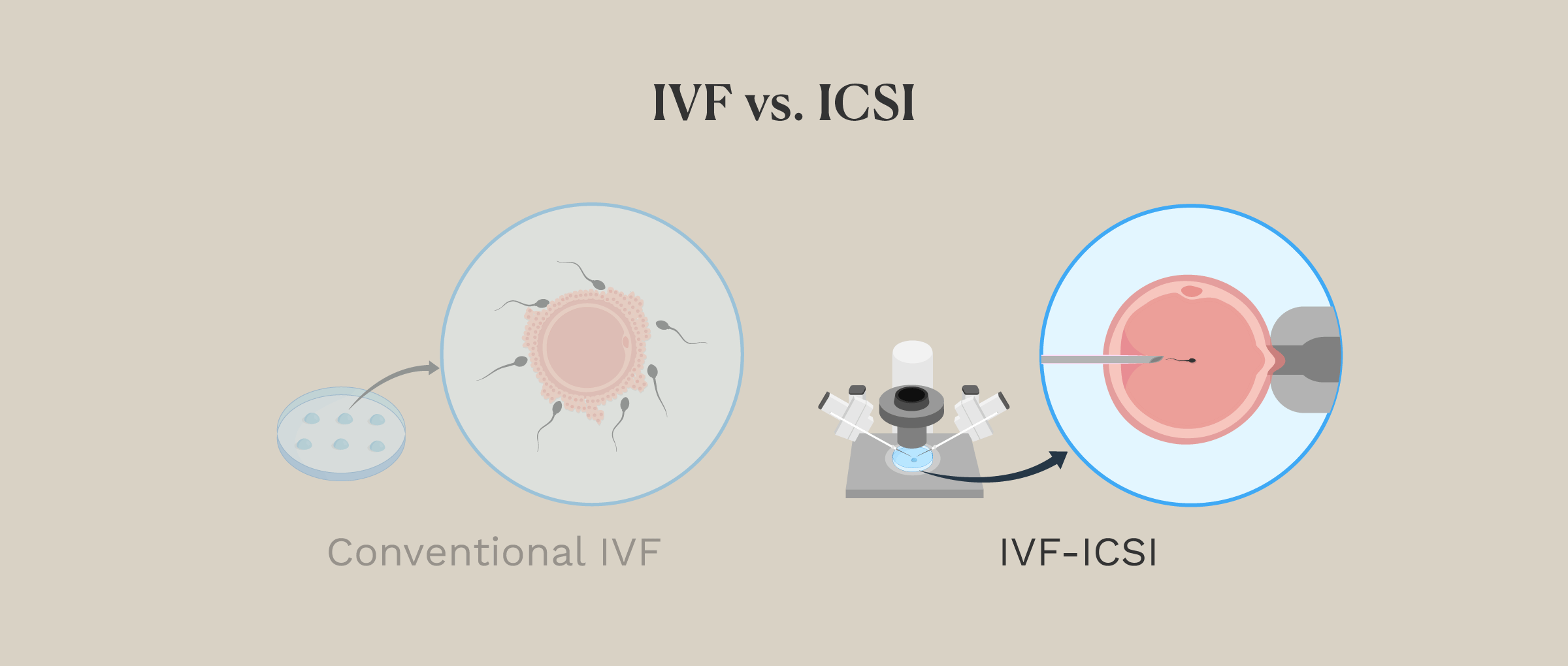
At The Fertility Center of Las Vegas, we perform IVF with ICSI to ensure the highest percentage of fertilization. Once fertilized, embryos are monitored closely in our laboratory as they develop.
We invite you to watch this educational IVF treatment video to learn more about the process:
Is IVF Treatment right for you?
IVF is recommended for patients experiencing a range of fertility challenges. Our specialists will evaluate your complete history before making any recommendation. Generally, IVF treatment is indicated for:
- Blocked fallopian tubes: IVF bypasses the tubes entirely, making it the most effective option when tubal blockage prevents natural fertilization.
- Male factor infertility: including low sperm count or poor sperm motility that makes natural or low-intervention conception unlikely.
- Endometriosis: where tissue similar to the uterine lining grows outside the uterus, interfering with natural conception.
- Diminished or low ovarian reserve: when the ovaries are producing fewer or lower quality eggs than expected for your age.
- Recurrent implantation failure or pregnancy loss: where IVF combined with preimplantation genetic testing (PGT) can help identify chromosomally healthy embryos for transfer and optimize the uterine environment.
What are the Steps of the IVF Process?
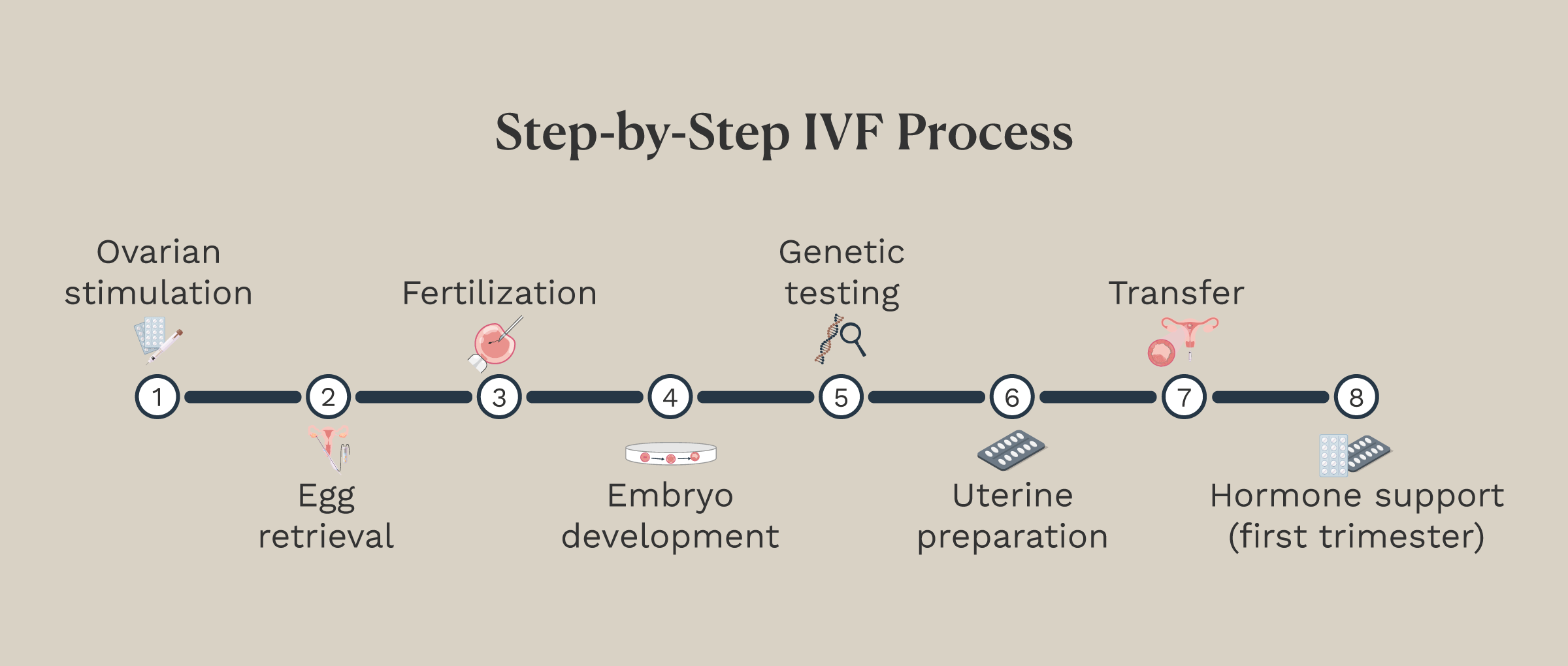
Understanding your IVF treatment schedule is essential for your peace of mind. A complete IVF cycle takes several weeks and moves through clearly structured stages.
Our clinical team oversees every detail throughout the IVF process.
- Ovarian stimulation: injectable medications stimulate the ovaries to develop multiple follicles. Growth is monitored closely with ultrasound and hormone testing.
- Egg retrieval: once follicles reach the right size (approximately 16–18mm), mature eggs are gently retrieved in a brief outpatient procedure performed under mild sedation.
- Fertilization: our embryologists fertilize the eggs using ICSI in our IVF laboratory. Sperm from your partner or a donor is used.
- Embryo development: embryos are monitored for 3 to 5 days under carefully controlled laboratory conditions.
- Genetic testing (optional): embryos can undergo Preimplantation Genetic Testing (PGT) at this stage to evaluate chromosomal health before transfer.
- Uterine preparation: hormones are used to prepare the uterine lining for embryo implantation.
- Embryo transfer: the highest-quality embryo is transferred into the uterus using a thin catheter passed through the cervix. Remaining embryos are frozen (cryopreserved) for future use.
- Ongoing hormone support: hormone supplementation continues for several weeks after a positive pregnancy test to support early pregnancy.
IVF success rates
IVF success rates and the results of your IVF treatment depend primarily on age and the health of the eggs. At The Fertility Center of Las Vegas, our laboratory uses advanced technology and genetic testing to give every embryo transfer the best possible chance of success.
During your consultation, our specialists will review your test results and provide personalized expectations for your specific situation — including an honest discussion of how many IVF cycle may be needed based on your diagnosis and history.
Ready to learn more about IVF? Let’s talk
If you’d like to find out whether IVF is the right approach for your situation, schedule a consultation at The Fertility Center of Las Vegas. Our team is here to give you clear answers and a personalized plan.