
Male Fertility Testing in Las Vegas: What to Expect to Change to Clear Answers for Your Family
In approximately 40–50% of infertility cases, a male factor is involved. This is why at The Fertility Center of Las Vegas, we evaluate both partners from the very beginning — so nothing gets missed and no time is lost.
Our team of reproductive endocrinology and infertility specialists uses a comprehensive, personalized approach to male fertility testing. Understanding what’s happening with sperm health is one of the most important steps toward finding the right path forward — and it starts with a simple evaluation.
Why is it important to test male fertility from the start?
Fertility testing is often thought of as something only women need — but that misses half the picture. Evaluating both partners at the same time means we can identify any contributing factors quickly, recommend the right treatment from the start, and avoid unnecessary delays.
A semen analysis can often be completed and returned within 24–48 hours, making it one of the fastest and most informative tests in a fertility work-up.
What are the fertility tests for men?
At The Fertility Center of Las Vegas, every evaluation is personalized to the patient. Your doctor will recommend the combination of tests that makes the most sense based on your history and your partner’s results. Here are the main tests we use:
Semen analysis
The semen analysis is the primary and most important fertility test for men. You will provide a semen sample in a sterile container, which is then analyzed at our affiliated laboratory, Ovation® Las Vegas. Our andrologists examine the sample to evaluate:
- Volume: the total amount of semen produced.
- Concentration: the number of sperm per milliliter of semen.
- Motility: the percentage of sperm that are moving.
- Morphology: the percentage of sperm with a normal shape.
- Vitality: the percentage of live sperm, including those that are not moving.
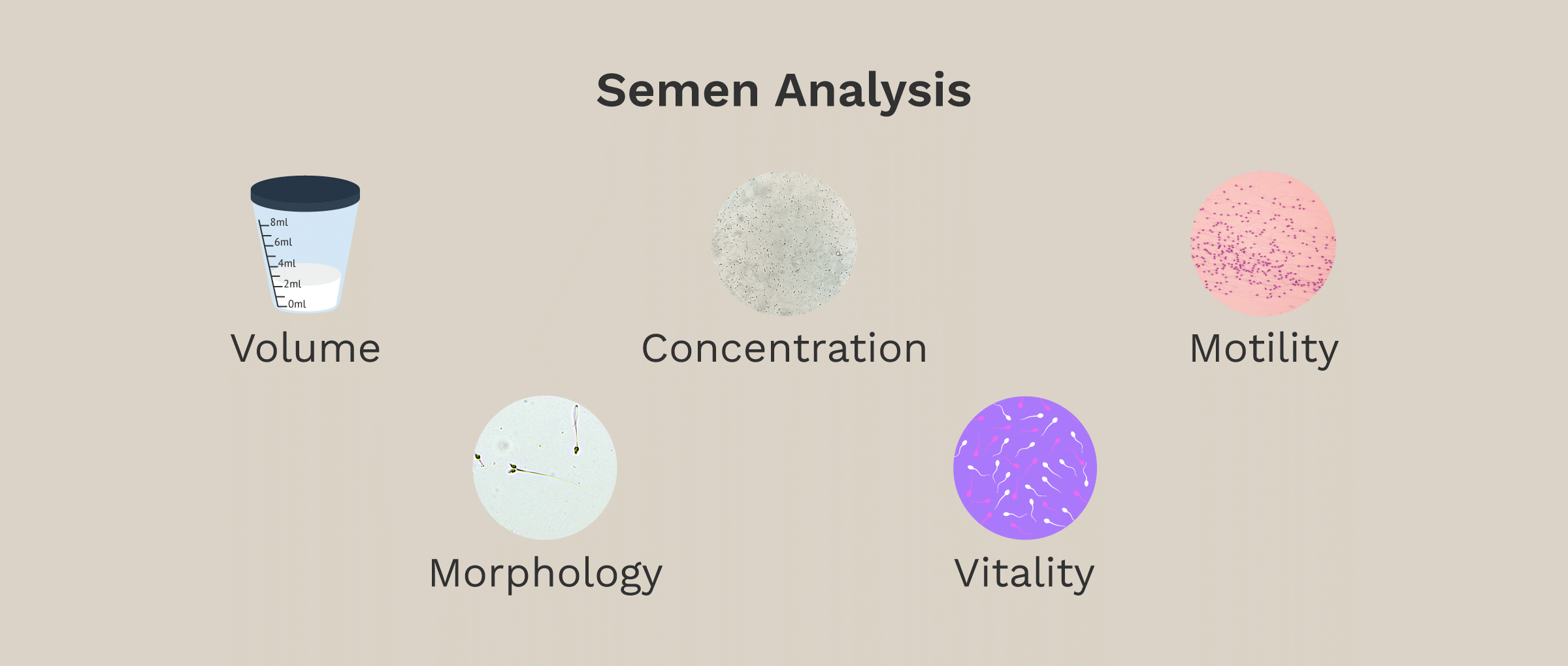
The analysis also includes observations that can be made visually, such as semen color and liquefaction time. For more details, visit our Semen Analysis page.
Male hormone evaluation
Just as hormones regulate the female reproductive system, they also direct sperm production in men. A simple blood draw allows us to measure key hormones including testosterone, FSH (Follicle-Stimulating Hormone), LH (Luteinizing Hormone), TSH (Thyroid-Stimulating Hormone), prolactin, and estradiol. These results help us understand whether a hormonal imbalance may be contributing to sperm production issues.
Path SpermQT test
The Path SpermQT test goes beyond what a standard semen analysis can show. Sometimes sperm appear normal under a microscope but have underlying genetic factors that affect their ability to fertilize an egg and support a healthy pregnancy.
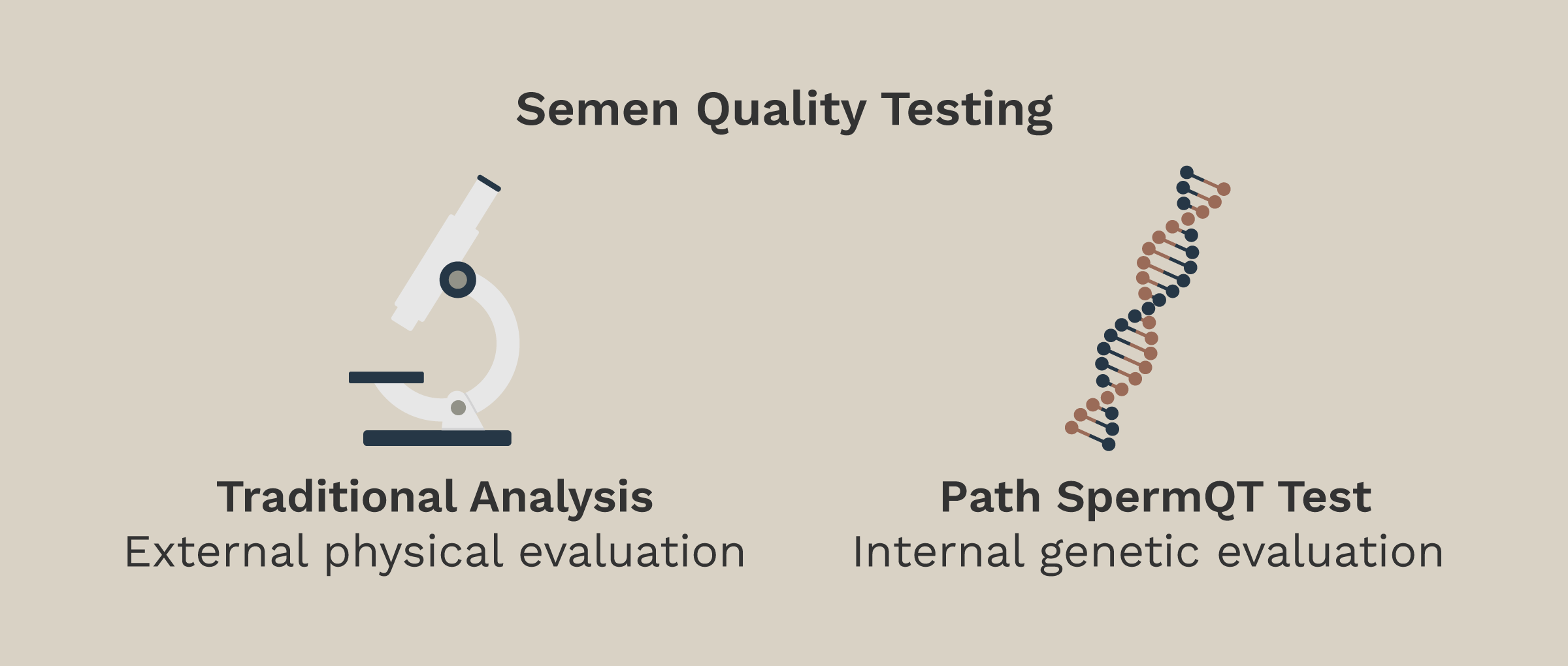
The Path SpermQT is a genetic test that examines more than 1,200 sperm genes to assess whether the sperm’s DNA is functioning properly. This helps us understand whether sperm are truly capable of fertilization and early embryo development — information that isn’t visible on a standard analysis.
Sperm DNA fragmentation testing
Sperm DNA fragmentation testing evaluates the integrity of the genetic material within the sperm. High levels of DNA fragmentation can affect fertilization rates and embryo development, even when other semen parameters appear normal. This test is recommended when standard analysis results don’t fully explain a couple’s fertility challenges, and in cases of recurrent pregnancy loss.
Semen culture
A semen culture checks for the presence of bacteria or infection in the semen that could be affecting sperm health or fertility. The culture may be performed on the original semen sample or may require a separate second semen sample.
What happens if the results show a problem?
A diagnosis gives us the information we need to move forward with the right plan. Most male factor infertility is treatable — and knowing what we’re working with means we can recommend the most effective path without wasting time.
Depending on your results, treatment options may include TESE (Testicular Sperm Extraction), IUI (Intrauterine Insemination), ITI (Intratubal Insemination), or IVF (In Vitro Fertilization), which can overcome the vast majority of male fertility challenges.
When a more in-depth urological evaluation is needed, our doctors work closely with specialized reproductive urologists to provide comprehensive care.
Ready to take the next step? Let’s find answers together
The most important thing you can do right now is get a clear picture of where things stand. Schedule your consultation at The Fertility Center of Las Vegas and let’s find the right path forward for you.