
Hysteroscopy in Las Vegas: Uterine Evaluation and Treatment
For an embryo to implant and grow, the inside of the uterus needs to be clear and healthy. Evaluating the uterine cavity is an important part of most fertility work-ups — and when something needs to be addressed, being able to diagnose and treat it in the same procedure saves you time and unnecessary steps.
At The Fertility Center of Las Vegas, we use a procedure called a hysteroscopy to look directly inside your uterus. This allows our specialists to find — and in many cases treat — issues that could be standing in the way of a successful pregnancy.
How does a hysteroscopy work?
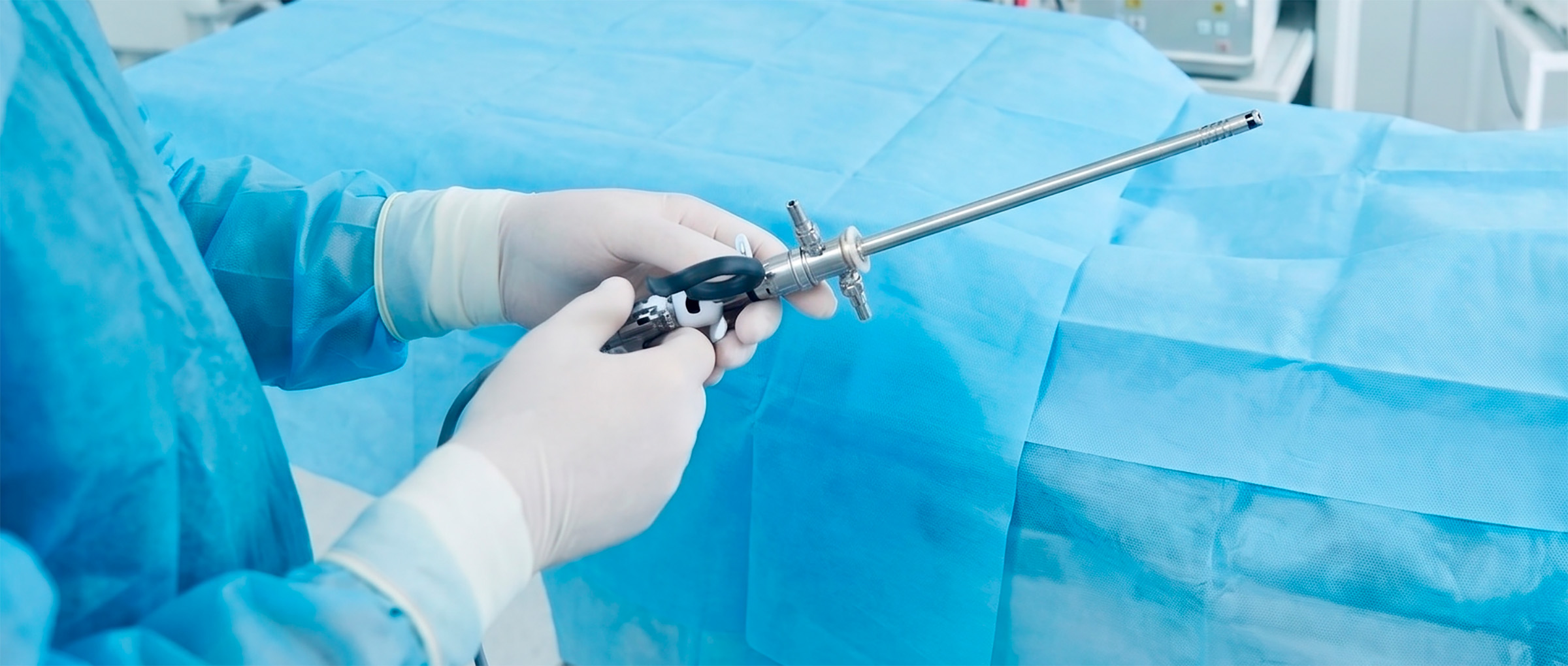
A hysteroscopy uses a hysteroscope — a very thin, lighted tube with a small camera on the end. Your doctor gently inserts the hysteroscope through the vagina and cervix until it reaches the uterus.
A small amount of saline solution is used to gently expand the uterine cavity, giving us a clear, real-time view of the uterine lining on a monitor. This allows us to identify anything that could interfere with embryo implantation or pregnancy — such as polyps, fibroids, a uterine septum, or scar tissue (adhesions).
For most diagnostic hysteroscopies, a local anesthetic or mild pain management is sufficient. If you are having an operative hysteroscopy, your doctor will discuss the appropriate anesthesia options with you beforehand.
Diagnostic vs. operative hysteroscopy: what is the difference?
Depending on your situation, your doctor may recommend one of two types of hysteroscopy — or both in the same procedure:
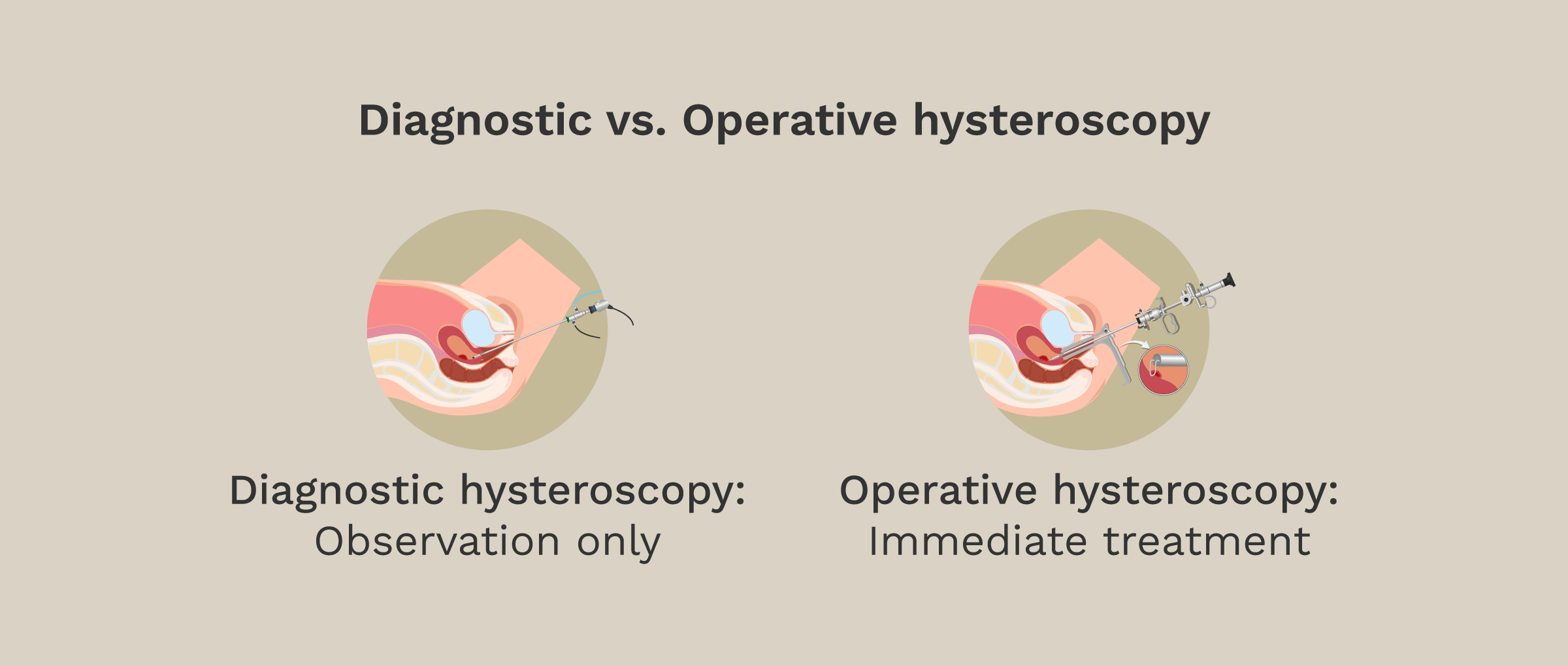
- Diagnostic hysteroscopy: used to observe the uterine cavity and confirm whether everything looks healthy, or to investigate symptoms like abnormal bleeding, recurrent miscarriages, or suspected structural issues.
- Operative hysteroscopy: if an issue is identified — either on a prior sonohysterogram or during the diagnostic hysteroscopy itself — we can pass small instruments through the hysteroscope to remove it in the same procedure. This means diagnosis and treatment happen at the same time, without the need for a separate visit.
What side effects should I expect after a hysteroscopy?
A hysteroscopy is a minimally invasive procedure and most patients tolerate it very well. Side effects are typically mild and short-lived:
- Mild cramping: similar to menstrual cramps, most common during and immediately after the procedure. Taking an over-the-counter pain reliever like ibuprofen one hour beforehand can help.
- Light spotting or discharge: normal for a day or two after the procedure.
- Mild bloating: caused by the saline solution used to expand the uterine cavity; resolves quickly.
In rare cases, complications such as fever, heavy bleeding, or significant pelvic pain may occur. If you experience any of these after your procedure, contact our office right away.
Recovery after a hysteroscopy
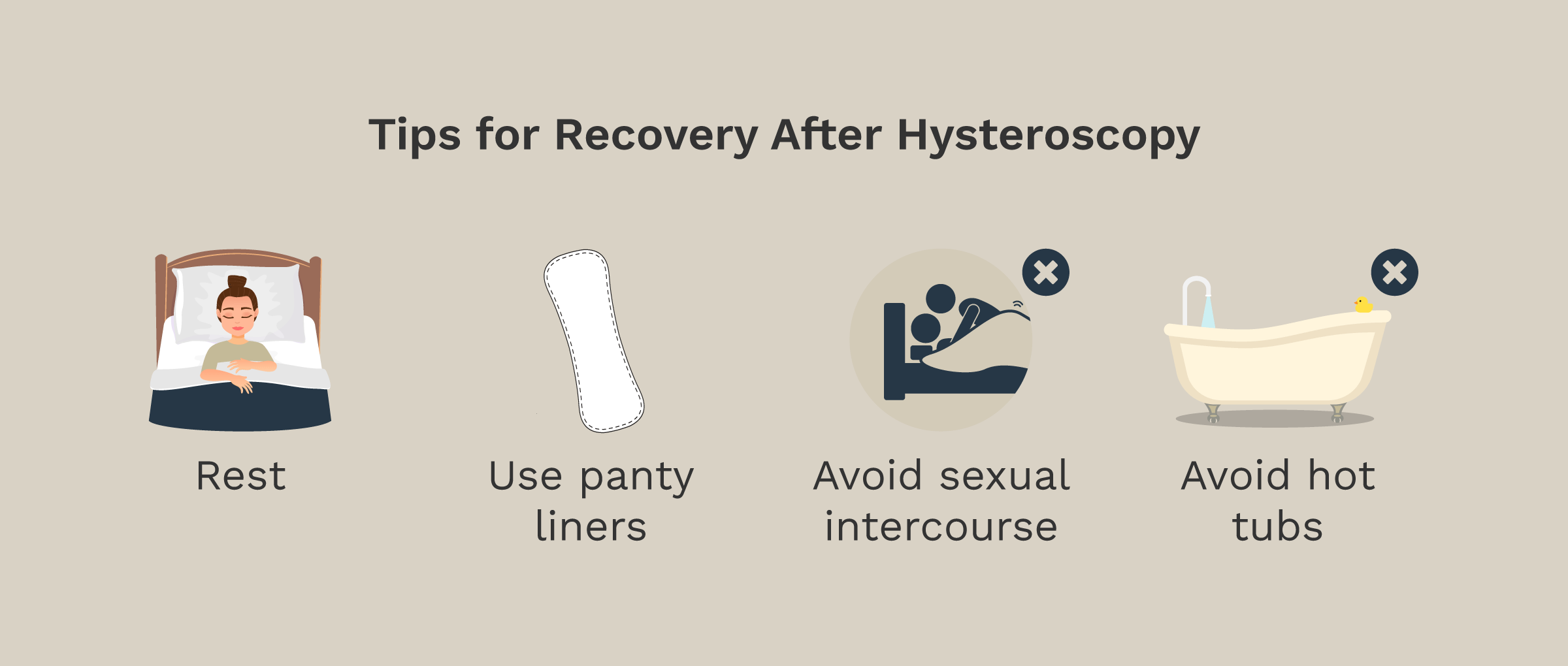
Recovery from a hysteroscopy is typically quick. Most patients go home the same day and are back to their normal routine within 24 hours. Here are a few simple steps to support your recovery:
- Rest for the remainder of the day: light activity is fine, but take it easy for the first 24 hours.
- Use a pad or panty liner: avoid tampons or menstrual cups until any spotting has resolved, to reduce the risk of infection.
- Avoid sexual intercourse: your doctor will let you know when it’s safe to resume — typically a couple of days after the procedure.
- Avoid submerging in water: stick to showers and avoid baths, hot tubs, or swimming until your doctor clears you.
Questions about your hysteroscopy? We’re here
If your doctor has recommended a hysteroscopy, or if you’d like to learn more about evaluating your uterine health before treatment, our team is ready to help. Schedule a consultation at The Fertility Center of Las Vegas and let’s take the next step together.