
What to Expect from a Sonohysterogram (SHG) in Las Vegas
When preparing for fertility treatment, one of the most important things we need to evaluate is the inside of your uterine cavity — the space where a pregnancy grows. A sonohysterogram, also called a saline infusion sonogram (SIS), is one of the most effective ways to do that.
At The Fertility Center of Las Vegas, a sonohysterogram, also called a saline infusion sonogram (SIS) or saline ultrasound, is a transvaginal ultrasound procedure that uses saline (salt water) to gently expand the uterine cavity, giving us a clear, real-time view of the uterine lining. The goal is to confirm that your uterine cavity is healthy and free of anything that could interfere with embryo implantation or pregnancy.
How is a sonohysterogram performed?
The procedure is performed in our office and takes approximately 10–15 minutes. Here’s what happens:
- You’ll lie on an exam table and a speculum is gently inserted to access the cervix.
- A soft, thin catheter is passed through the cervix into the uterus, and the speculum is then removed.
- A transvaginal ultrasound probe is inserted, and saline is slowly introduced through the catheter to gently fill the uterine cavity.
- Under real-time ultrasound imaging, our team can see the uterine lining clearly — including small abnormalities that wouldn’t be visible on a standard ultrasound.
Because this procedure involves the uterus, it’s important to confirm you’re not pregnant beforehand. For this reason, the SHG is always scheduled after your menstrual bleeding has stopped, but prior to the typical time of ovulation.
What is a sonohysterogram looking for?
A sonohysterogram is a routine part of most infertility work-ups at The Fertility Center of Las Vegas. The success of treatments like IVF depends on a healthy uterine environment — and a standard transvaginal ultrasound alone can miss small findings that matter.
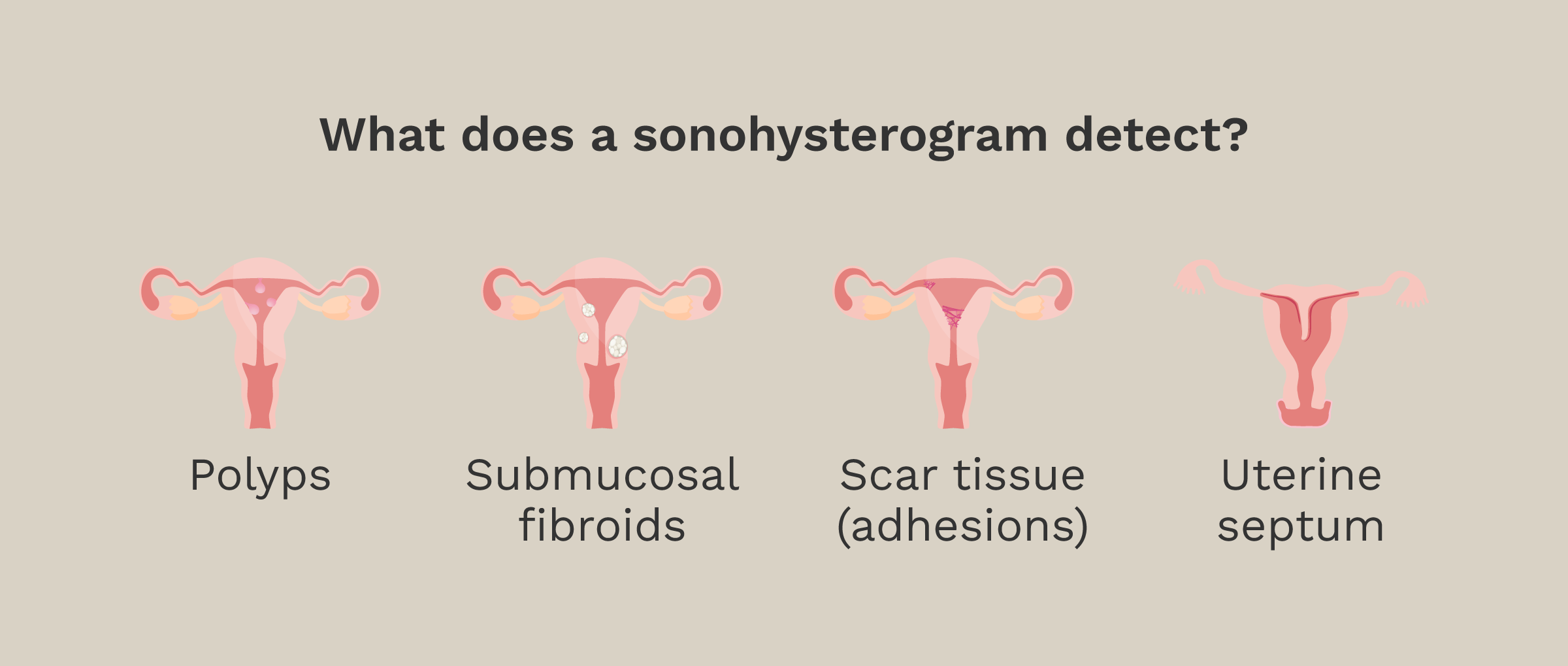
With the saline distension of the uterine cavity, we can clearly identify:
- Polyps: small growths on the uterine lining that can affect implantation.
- Submucosal fibroids: benign growths that protrude into the uterine cavity.
- Scar tissue (adhesions): sometimes called Asherman’s syndrome, which can reduce the space available for a pregnancy.
- Uterine septum: a structural abnormality present from birth that divides the uterine cavity.
We also repeat this test after a recent pregnancy or miscarriage to confirm there is no residual tissue remaining in the uterine cavity.
Who performs the sonohysterogram?
One of our trained ultrasonographers will perform your SHG here at our Las Vegas fertility center. Our team will walk you through every step of the procedure in real time so you always know what’s happening — and you’re never left wondering.
What side effects should I expect?
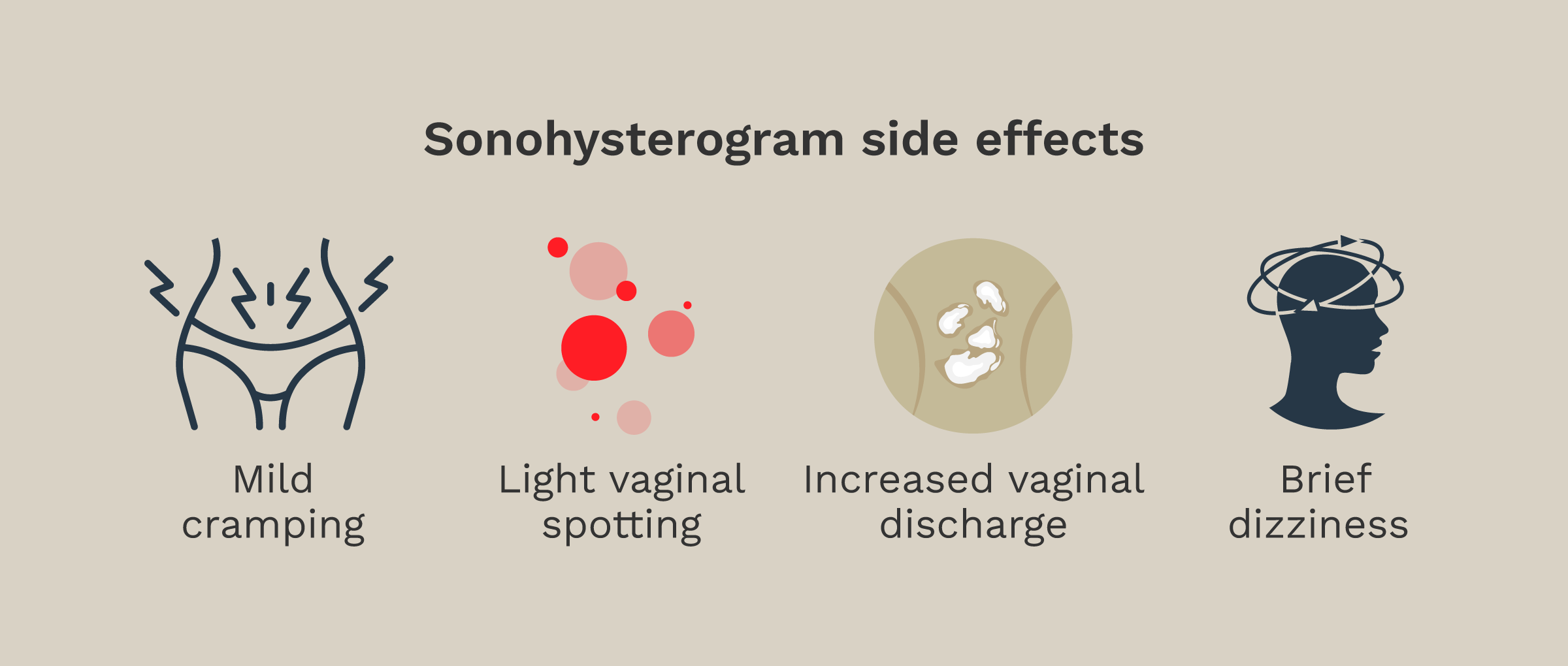
Most patients tolerate a sonohysterogram very well. The procedure is minimally invasive, and any discomfort is typically mild and short-lived. The most common things you may notice are:
- Mild cramping: similar to menstrual cramps, caused by the gentle expansion of the uterine cavity.
- Light vaginal spotting: usually resolves within 24–48 hours.
- Increased vaginal discharge: as the saline solution is released after the procedure.
- Brief dizziness: occasionally, a mild vasovagal response can occur after cervical manipulation. This is uncommon and passes quickly.
If you’re concerned about cramping, taking an over-the-counter NSAID like ibuprofen one hour beforehand — or right after if needed — is usually very effective.
What are the next steps after a sonohysterogram?
A sonohysterogram is often one of the final tests in your infertility work-up. Your provider will let you know right away if anything found during the SHG requires further investigation — in some cases, a hysteroscopy may be recommended to get a closer look and, if needed, treat what was found in the same procedure.
If no further follow-up is needed, you’ll continue with the remainder of your infertility work-up. Once all testing is completed, you’ll be scheduled for a consultation with your doctor to review all findings together and discuss your personalized treatment plan.
Ready to schedule your sonohysterogram? We’re here.
If you have questions about the SHG or what to expect at your appointment, our team is happy to walk you through it. Contact The Fertility Center of Las Vegas and let’s take the next step together.