

Stress and Fertility: What the Research Says
If you’re going through fertility treatment and dealing with infertility stress, you’ve probably heard some version of “just relax and it will happen.” It’s well-meaning advice, but it can also feel dismissive — and it puts the weight of success or failure on your emotional state, which isn’t fair or accurate.
The relationship between stress and fertility is real, but it’s more nuanced than most people think. Here’s what the science actually shows — and what it means for you.
How does stress affect fertility?
When the body experiences prolonged stress, it produces elevated levels of cortisol — the primary stress hormone. Sustained high cortisol levels can cause a hormonal imbalance that interferes with the hormonal signals between the brain and the ovaries, potentially delaying ovulation or contributing to irregular menstrual cycles.
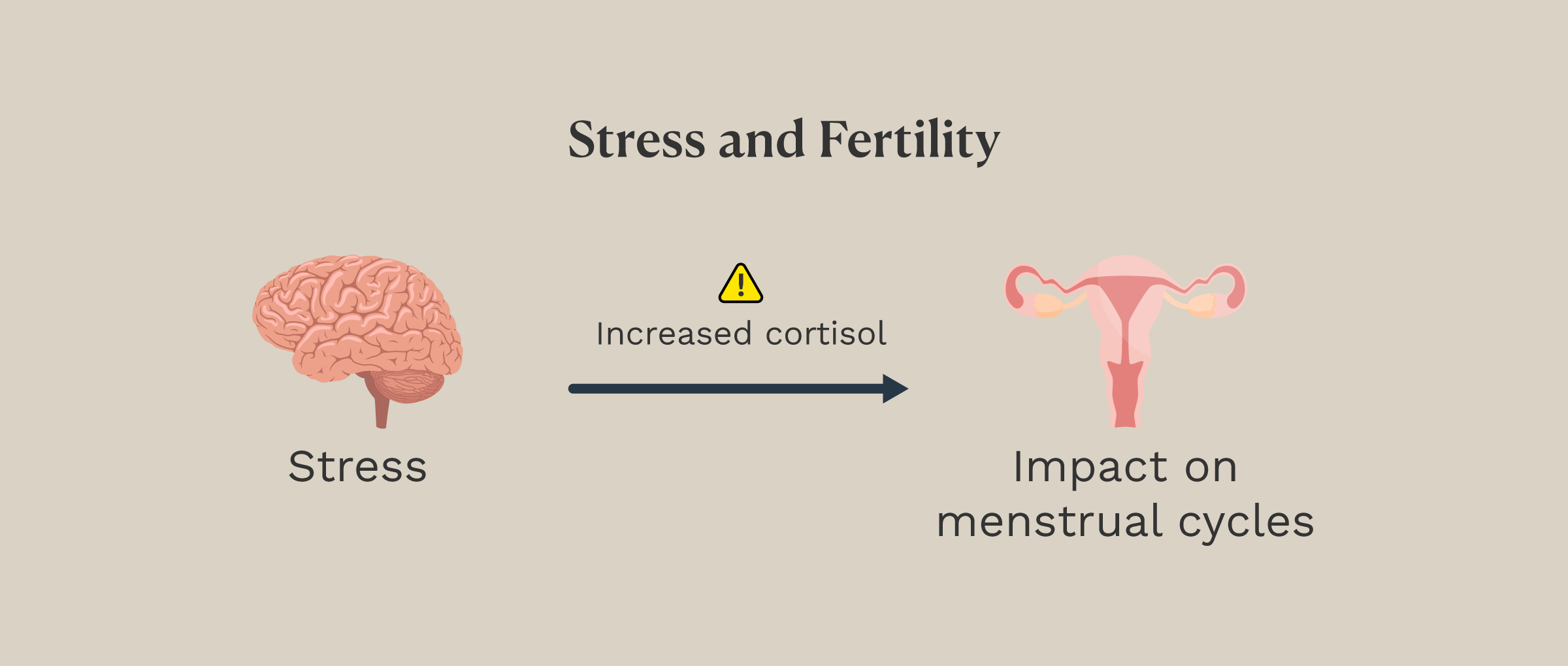
That said, one of the most important things to understand is this: normal everyday stress is not a primary cause of infertility. The research suggests it’s chronic, sustained stress over months — not the ordinary pressures of work and daily life — that may have a meaningful impact on reproductive hormones.
How does stress affect sperm and male fertility?
Stress doesn’t only affect people with ovaries. Prolonged emotional or physical stress can alter hormone production in men, which in turn affects sperm formation and sperm quality. In cases of very high, sustained stress, research has shown decreases in semen volume and sperm motility — the ability of sperm to move effectively toward an egg.
These factors can be evaluated accurately and quickly to diagnose or rule out male factor infertility with a semen analysis — a laboratory evaluation of a semen sample that measures sperm count, movement, shape, and volume.
Can stress levels be measured as part of a fertility evaluation?
If you feel that sustained stress may be affecting your well-being and reproductive health, our specialists can include hormonal assessment as part of your fertility evaluation. Blood tests can measure cortisol levels alongside your other reproductive hormones, giving us a more complete picture of what’s happening and the impact of stress on your body.
This information becomes part of your personalized care plan — helping your doctor make recommendations not just for medical treatment, but for the lifestyle and support factors that contribute to your overall health during treatment.
Stress and Fertility Treatments: Can stress affect IVF or IUI outcomes?
This is one of the questions we hear most often from patients, and the honest answer is nuanced.
Feeling anxious on the day of your egg retrieval, embryo transfer, IUI, or ITI procedure is completely normal — and the research consistently shows that day-of procedural nerves do not meaningfully affect pregnancy rates. You don’t need to be calm on the day; you just need to be there.
Chronic and sustained stress over many months is a different picture. Some studies have found a modest association between prolonged psychological distress and slightly lower success rates in IVF cycles. This is why caring for your emotional well-being throughout treatment — not just on appointment days — is something we take seriously.
What can you do to support your well-being during fertility treatment?
While stress isn’t the primary driver of infertility, supporting your mental and physical health during treatment is genuinely worthwhile — not because it will guarantee success, but because you deserve to feel supported through what can be a demanding process.
Some approaches that many patients find helpful:
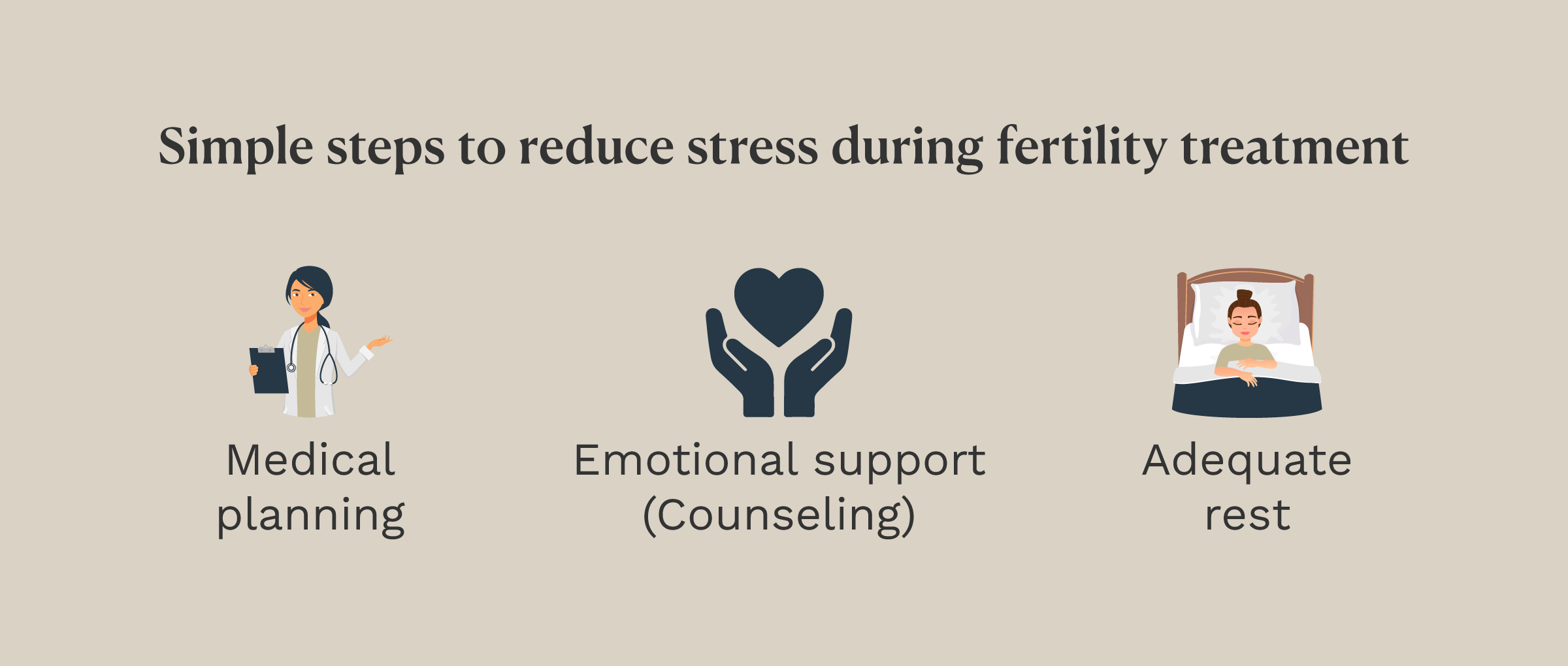
- Counseling or therapy: working with a therapist who has experience with fertility-related stress can help you process the emotional complexity of treatment in a healthy way.
- Support groups: connecting with others going through similar experiences can reduce feelings of isolation. RESOLVE (the National Infertility Association) maintains resources for finding peer support groups.
- Mindfulness and relaxation practices: techniques such as meditation, guided breathing, yoga or even acupuncture have shown modest benefits for reducing anxiety during fertility treatment in some studies.
- Physical activity: moderate regular exercise supports hormonal balance and mental health. Your doctor can advise on what level of activity is appropriate depending on where you are in your cycle or treatment.
- Adequate sleep and rest: sleep plays an important role in hormone regulation and overall resilience. During fertility treatment, prioritizing consistent, restful sleep – and giving yourself permission to rest when you need it – supports both your physical and emotional well-being.
- Reducing avoidable stressors: this isn’t about eliminating stress from your life — that’s not realistic. But identifying specific avoidable stressors (such as limiting social media exposure around fertility topics) can be worth doing.
If the financial aspect of treatment is a source of significant stress, our team is here to help with that too. We’ll walk you through your insurance coverage and out-of-pocket costs clearly before treatment begins.
Questions about stress and your fertility? We’re here
If you’re concerned about how stress may be affecting your fertility, or you’d simply like to talk through your options, schedule a consultation at The Fertility Center of Las Vegas. We’re here to give you honest answers and support you through every step of the process.
infertility stress, stress and fertility, stress and fertility treatment